01
Childhood
You grow up as a new character in the world.
The official description frames every life as different: you grow up, have a family and pass genes to your children.
Editorial contact: Raymond
How a SuperNations life moves from childhood to power awakening, family, older age and leadership, plus the seasonal survival loop. Rules are taken from the official description, FAQ and patch notes, checked November 28, 2026.
This community clip follows a character toward age 30, which sits inside the 15–25 awakening window and the 60–80 grey-hair range that follows later.
Power awakening
15–25, or 12–14 with the Grace Period gene.
Legendary rate
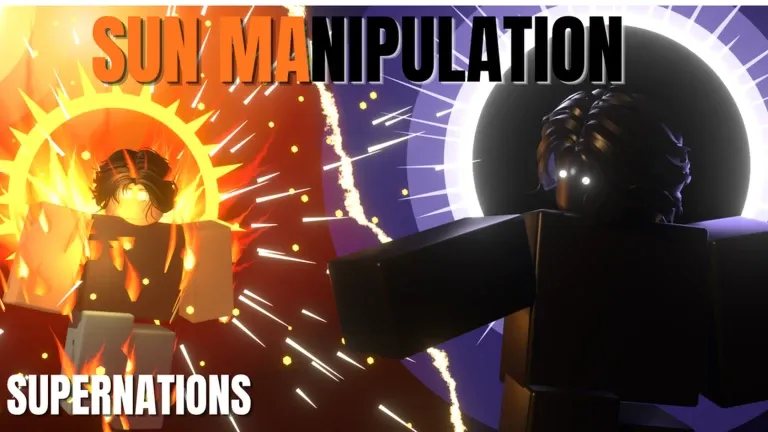
0.5% for Sun Manipulation and Reality Manipulation and no inheritance.
Health / strength cap
2196x health and 2196x strength.
Seasons
Sunny summer to snowy winter, with health, hunger and defense upkeep.
You grow up as a new character in the world.
The official description frames every life as different: you grow up, have a family and pass genes to your children.
A rare power may awaken between the ages of 15 and 25.
The Grace Period gene can move the chance to 12–14. Not every life awakens a power.
Form a family and pass genes to your children.
Genes include Grace Period and grey-hair genes. Legendary powers are explicitly not inherited.
Older characters can gain grey-hair genes.
The November 11–12 patch added grey-hair genes that you get at ages 60–80.
A civilization has a leader and heirs.
The official FAQ says a yellow outline marks the civilization leader and a purple outline marks an heir; the order the leader picked heirs decides succession.
Can move a power awakening to ages 12–14 instead of the usual 15–25.
Appears at ages 60–80; added in the November 11–12 patch.
The description mentions genes generally; only the two effects above are stated in the official FAQ and patch notes.
Marks the current leader of a civilization. The FAQ gives no additional stat effect for the outline.
Marks an heir. Succession follows the order the leader picked heirs in.
| Season | Visible cue | What to keep up |
|---|---|---|
| Summer | Sunny weather. | Keep health and hunger up. |
| Winter | Snowy weather. | Keep health and hunger up and defend what you have built. |
A life is a sequence of chances, not a build menu. You can influence the odds with the Grace Period gene, but the awakening itself rolls inside the published age window. That means the powers page is a reference for what may happen, while a job and a town are choices you make directly.
Older age is confirmed through the grey-hair genes at 60–80. The FAQ also confirms that offline persistence uses a cryopod and does not make the character safe. For the structures involved, see the buildings page.
The official Discord FAQ says 15–25, with a 12–14 chance if the character has the Grace Period gene. Awakening is a chance, not a guaranteed stage of every life.
The FAQ gives 2196x for both health and strength and calls it a very high cap. It does not publish a progression curve, so the number only tells you the ceiling exists.
The FAQ says yellow marks the leader of a civilization and purple marks an heir. The order the leader picked heirs in decides who takes over after the old leader passes.
The description says characters grow up, have a family and pass genes to their children. The Grace Period gene is confirmed to affect awakening age; the two 0.5% legendary powers are explicitly not passed down.
The description presents a cycle from sunny summer to snowy winter. Through the whole cycle you keep health and hunger up and defend what you have built; the game does not publish separate winter-only survival rules.
The FAQ says a cryopod lets you sleep frozen offline while your character stays in the game. You can still be killed offline, so it is persistence, not protection.
References for this page are listed below with their scope. This site does not hyperlink to third-party sites; copy the URL text if you want to check a source. Community rankings and estimates are not developer announcements.
Reference review date .
Editorial method and limitations · Report an error on this page